
Feeling “Off”? It Might Be Perimenopause
If your periods have become unpredictable, sleep feels impossible, or your mood seems different than it used to be, you may be wondering:
“Am I in perimenopause?”
Perimenopause is the transitional phase before menopause when hormones begin to fluctuate. It can last several years and often brings symptoms that feel confusing, unexpected, and sometimes overwhelming.
Understanding early vs late perimenopause can help you make better health decisions and feel more in control of your body.
What Is Perimenopause?
Perimenopause means “around menopause.”
It is the stage when estrogen and progesterone levels begin to fluctuate before periods stop completely.
Key facts:
- Usually begins in the late 30s to mid-40s
- Can last 4–10 years
- Ends when menstruation stops for 12 consecutive months (menopause)
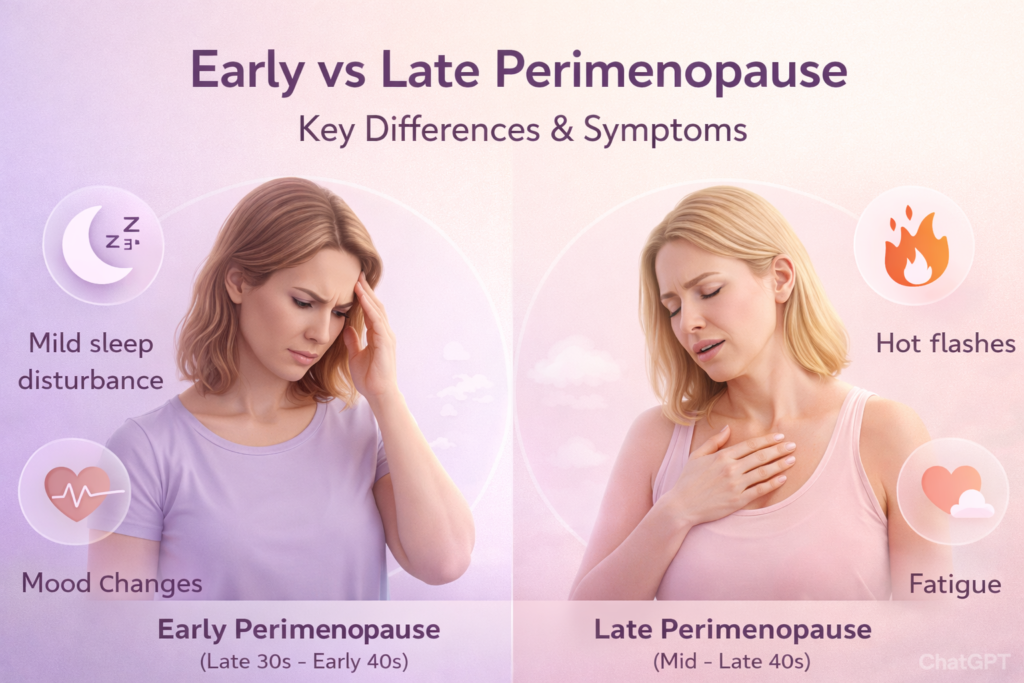
Early vs Late Perimenopause: What’s the Difference?
Perimenopause happens in phases. Symptoms often change as hormone fluctuations intensify.
Early Perimenopause
Typical age: late 30s to early 40s (sometimes later)
What’s happening: progesterone begins declining; ovulation may become inconsistent.
Common symptoms:
✔ Periods still regular but slightly shorter or longer
✔ PMS symptoms worsen
✔ Breast tenderness
✔ Mood swings or anxiety
✔ Sleep changes
✔ New sensitivity to stress
Cycle changes:
- Cycle length may vary by a few days
- Flow may become heavier or lighter
Important: Many women mistake early perimenopause for stress, lifestyle changes, or aging.
Late Perimenopause
Typical age: mid-40s to early 50s
What’s happening: estrogen fluctuates dramatically and begins to decline.
Common symptoms:
✔ Skipped periods
✔ Hot flashes and night sweats
✔ Vaginal dryness
✔ Brain fog and memory issues
✔ Joint pain
✔ Fatigue
✔ Increased anxiety or depression
Cycle changes:
- Months may be skipped
- Bleeding may be unusually heavy or very light
- Long gaps between periods
How Hormonal Changes Drive Symptoms
During perimenopause:
- Progesterone declines first → sleep problems & anxiety
- Estrogen fluctuates wildly → hot flashes & mood swings
- Ovulation becomes irregular → unpredictable cycles
These hormonal shifts explain why symptoms can feel random or inconsistent.
Early vs Late Perimenopause at a Glance
| Feature | Early Stage | Late Stage |
|---|---|---|
| Cycle | Mostly regular | Skipped or irregular |
| Hormones | Progesterone decline | Estrogen fluctuations & decline |
| Symptoms | PMS, mood changes, sleep issues | Hot flashes, brain fog, dryness |
| Flow | Slight changes | Heavy, light, or absent |
| Fertility | Reduced but possible | Significantly reduced |
How to Tell If You’re in Perimenopause
Many women search for:
- perimenopause symptoms checker
- perimenopause phase calculator
- perimenopause symptom assessment
You may be entering perimenopause if you notice:
✔ changes in cycle timing
✔ worsening PMS or new anxiety
✔ sleep disturbances
✔ unexplained fatigue
✔ hot flashes or night sweats
✔ mood changes
✔ heavier or skipped periods
If multiple symptoms appear together, hormonal transition may be occurring.
Why Identifying Your Phase Matters
Understanding your stage can help you:
✔ manage symptoms more effectively
✔ make informed health decisions
✔ discuss treatment options with your doctor
✔ improve sleep, energy, and mood
✔ protect long-term bone and heart health
When to See a Healthcare Professional
Consult a medical professional if you experience:
- very heavy bleeding
- bleeding between periods
- periods lasting longer than 10 days
- severe depression or anxiety
- symptoms affecting daily life
Perimenopause is natural, but medical support can make the transition easier.
Track Your Symptoms to Understand Your Body
Because perimenopause symptoms can fluctuate, tracking patterns is one of the most effective ways to understand your phase.
Monitoring:
- cycle length
- sleep quality
- mood changes
- hot flashes
- energy levels
can reveal patterns over time.
👉 Check your phase with the Perimenopause Analyzer and gain insights into your symptom patterns.
Final Thoughts
Perimenopause is not a sudden event — it’s a gradual transition.
Early perimenopause often brings subtle changes, while late perimenopause may introduce more noticeable symptoms. Understanding the difference helps you respond with knowledge instead of uncertainty.
If you’ve been wondering:
“How do I know if I’m in perimenopause?”
You’re not alone — and clarity starts with awareness and tracking.
👉 Use the Perimenopause Analyzer to assess your symptoms and better understand where you are in the transition.
Medical Disclaimer
This content is for educational and informational purposes only and does not constitute medical advice. Always consult with a qualified healthcare professional regarding any changes to your health, weight, or hormonal symptoms.